
BY TIM BARTROP
In this session, the topic deals with brake lines, hoses and cables and their use in building hot rods.
Brakes are a critical element of vehicle building that need to be done to good engineering practice if you want a safe project car. Let’s look at the key points:
• Brake lines need to be made of the correct approved material which is a twin wrap brazed steel pipe formerly known as Bundy tubing. Approved stainless steel tubing is also suitable. All tubing must be to SAE J1047.
• Naturally enough, brake lines must not be joined by welding or brazing.
• Brake hoses should be to SAE J1401 and will be marked with that standard. Hoses should be new – using ones from a donor car or wreck is not recommended.
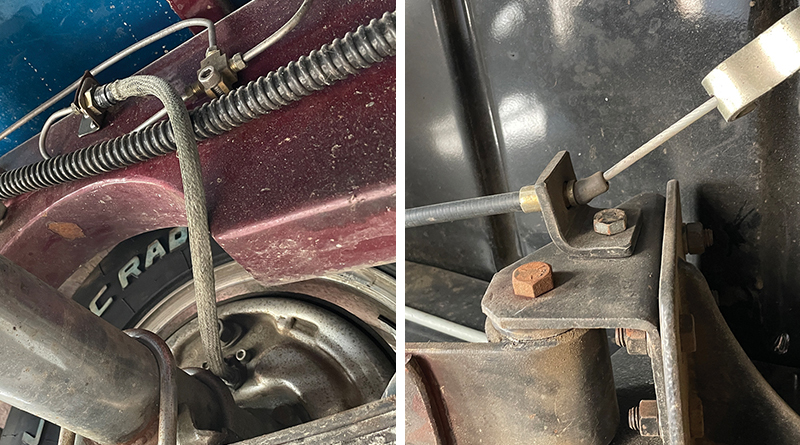
• Where there is a joint between a solid line and a hose, there needs to be a bracket to secure the line with a C clip while allowing the hose to flex. Otherwise the movement of the hose can fatigue the solid line over time.
• Solid lines should be secured to the chassis or body every 300-400mm to avoid wear from rubbing.
• Hoses need to be long enough to allow for suspension travel and front wheel turning from lock to lock. Hoses that are too short will pull tight on turns and during suspension movement and will ultimately cause a failure. Hoses that are too long can rub on tyres on turns or get squashed by the suspension.
• Handbrake cables need to be free to allow suspension travel, but secured elsewhere. Cables can rub on chassis or floor locations provided this is planned for in the design. Many production cars use floor or chassis elements to act as a pivot for the cable to reach the wheel point.
Check out the pictures to see the kind of things we find during inspections.


